Petrol Price in Pakistan Today – Latest Rates and Full Impact Guide (April 2026)
The hot news again circulating on social media and news channels is petrol price in Pakistan. The changes in the fuel prices directly impact all Pakistani daily wage earners up to business owners.
The government publishes updated rates after every two weeks and individuals at once begin to look up increased rates online. This paper discusses the recent rates, causes of changes, and the way increasing fuel prices impact your everyday existence totally.
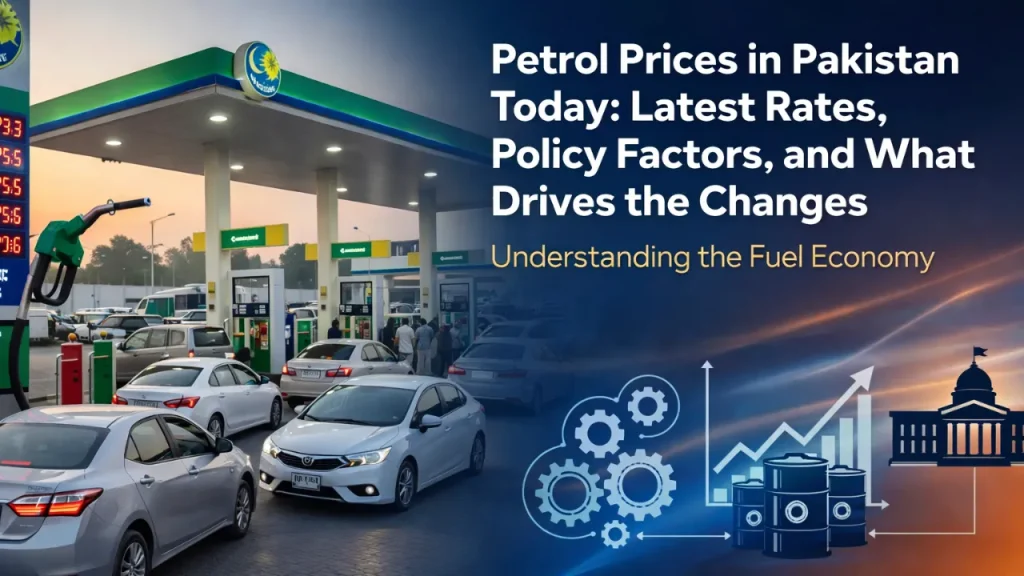
The current price of petrol in Pakistan is PKR 299.50 per litre, which is effective as of 11 April 2026. The fuel prices are revised after every 15 days depending on the international oil prices, exchange rates and government taxes.
Latest Petrol Price in Pakistan – Current Official Rates (April 2026)
Fuel Type |
Prices |
|
Petrol (MS 92) |
Rs. 299.50 |
|
High Speed Diesel |
Rs. 311.47 |
|
Kerosene Oil |
Rs. 233.90 |
|
Light Diesel Oil |
Rs. 199.98 |
Understanding the Different Fuel Types
Petrol (MS-92)
This is the fuel which is mostly used in Pakistan in motor cycles, cars and small vehicles. It is regular grade petrol which can be found in all the fuel stations in the country.
High Speed Diesel (HSD)
The overriding usage of diesel in the transport, trucks, and farming machinery sector is the reason why its cost greatly influences the general inflation rate in the nation.
Kerosene Oil
This is mainly used in the rural areas to do the lighting as well as cooking. It also has industrial applications and heating equipment.
Light Diesel Oil (LDO)
This is utilized primarily in industrial furnaces, heating and to a small portion of agricultural machinery. It has a lower demand compared to HSD.
High Octane Blending Component (HOBC)
High Octane (HOBC) fuel is more finer and costly, approximately Rs. 420 to Rs. 450 per litre. This type of fuel is primarily applied in high-performance cars.
Recent Price History – A Detailed Comparison
April 2026 Timeline:
Date |
Petrol Price |
Change |
|
June 15 2026 |
Rs. 373 |
-74 |
|
June 20 2026 |
Rs. 299 |
-74 |
Factors Behind Recent Price Volatility
As the oil markets around the world were already exhibiting colossal volatility because of Middle East tensions and closing of the Strait of Hormuz, everyone was wondering whether the government would come to the rescue or impose another price increase.7
This is good news because this cut has brought a lot of relief to the masses. As the world oil prices continue to fall and with government intervention, there is an optimism that the fuel prices will further fall in the coming days.
Long-Term Price Trends (2023-2026)
In the last three years, petrol prices in Pakistan have been changing drastically. In 2023, the average price was at an average of Rs. 270-290 per liter. In 2024, the prices had already exceeded the Rs. 300 mark consistently. In the year 2025, the prices were between RS. 280 and Rs. 350 per liter.
Why Petrol Prices Change in Pakistan – A Comprehensive Analysis
Key Reasons Behind Price Fluctuations
There are a number of factors that directly affect the decision of the government to change fuel prices frequently:
International Crude Oil Prices
The world oil prices, currency depreciation, and government taxation have been the most influential in influencing fuel prices in the country. The world feels the impact of decreased production by OPEC (Organization of the Petroleum Exporting Counties), as the world price increases, and Pakistan has to pay a higher price on imported oil.
Crude oil prices are affected by international conflicts, geopolitical tensions as well as by supply chain disruptions. The Middle East scenario in recent times showed the extent to which prices may shoot up when supply channels are jeopardized.
Exchange Rate Fluctuations
The value of Pakistani Rupee against the US Dollar will determine the price of the imported petroleum to Pakistan. As oil is traded in US dollars, any depreciation of rupee has an immediate effect of raising the price of fuel imports.
The purchasing power depends on the value of PKR against the US Dollar, the weaker the rupee to the US dollar, the higher the costs incurred by the government to buy the same amount of oil and this is usually transferred to the consumer.
Government Taxes and Levies
The Federal Government levies a fixed tax known as Petroleum Levy to achieve revenue targets.7 This tax, among other taxes such as General Sales Tax (GST) is included to the final consumer price. These taxes are occasionally changed by the government to either relieve or raise money.
Refinery Margins and Distribution Costs
The Refinery Margin is the profit margin retained by the local refineries to process fuel, plus shipping and distribution costs until it is sent to petrol stations nationwide.7 The base price is added to shipping and distribution costs before fuel is shipped to the petrol stations in the country.
International Agreements and IMF Conditions
The agreements that Pakistan has with foreign financial institutions tend to demand subsidy cuts and tax changes, which also contribute to an increase in the cost of fuel.8
Supply and Demand Dynamics
The international prices can be influenced by global oil consumption trends, seasonal demand changes, and the stock at the leading oil-consuming countries. When demand in key economies such as China, US or Europe is high, the world will experience an upward price trend.
How the Price is Calculated
The federal agency, created under the OGRA Ordinance 2002 to control the downstream petroleum industry in Pakistan, is OGRA -the Oil and Gas Regulatory Authority. Two times a month, the pricing wing of OGRA conducts a standardised computation to find out the cost of petrol at the pump using international standards and the existing exchange rate.2
The formula includes:
- Price of international standard (import parity price).
- Exchange rate conversion
- Equalization margin of inland freight.
- Distribution margin
- Dealer commission
- Petroleum development levy
- General sales tax
Based on these aspects, the Ministry of Finance determines whether to transfer the burden to the populace or make a subsidy.
Impact on Daily Life and Common Public
In the case of Pakistan, fuel prices have been a major issue among the population and in 2026, the prices of petrol and diesel experienced a sudden rise and fall. Regardless of whether you ride a bike, own a car or conduct business, fuel prices have a direct impact on your day-to-day costs.
Household Budget Strain
The increase in fuel prices puts an immediate strain on average Pakistani families all over the country. The counter-waves are experienced in all spheres of everyday life:
- Grocery Costs: The cost of goods transportation to markets by transporters increases the prices of goods in groceries. When stocks of trucks are charged higher prices of delivering, shopkeepers transfer this to the consumers when they pay more of diesel.
- Generator Fuel: Generator fuel goes more expensive during load shedding hours that increases its impact on household finances. Families in places where there is a high power outage pay a lot more on power reserves.
- Commuting Costs: Commuting costs of car owners increase tremendously, and so do the commuting costs of motorcycle riders. An average citizen who commutes to work covering a distance of 30-40 kilometers per month can have his monthly fuel bill rise by several thousands of rupees with each increase in price.
- Budget Adjustments: Some households are cutting the unnecessary costs to meet up basic fuel costs. Most families have reduced their spending on entertainment, dining out and other unnecessary expenses to meet the increasing fuel expenses.
Impact on Different Income Groups
The segment that would be most impacted is the middle and lower-income group since they are already grappling with the increasing cost of living.
Low-Income Families: Daily wage workers who use motorbikes to commute are affected the most. Others have resorted to public transportation or even walking as a way of cutting down on expenses. The rural population who rely on kerosene lighting also bears the brunt.
Impact on Transport Fares and Businesses
Transport associations demand an increase in the fares immediately a time there is a stated rise in fuel prices. This translates to higher costs of travelling by the day to commute.
Public Transport Impact
- Buses and Coaches: Fares of inter-city and intra-city buses rise significantly with the rise in the cost of fuel. Bills incurred by long-distance travelers are increased by 15-25 per cent in times of high fuel prices.
- Rickshaws and Taxis: Rickshaw prices and wagon prices are on the rise making the daily commuting even more expensive to the employees. Drivers of auto-rickshaws instantly require additional charges, which can often result in disputes with the customers.
- Ride-Hailing Services: Apps such as Careem and InDrive automatically regulate their fares according to the prices of fuel, which makes even the transportation via the app more costly.
Business and Industrial Impact
- The impact is far-reaching: small businesses and industries have increased costs of operation.
- Delivery Services: E-commerce firms and food delivery businesses either raise the cost of delivery or incur losses which impact their profit margin.
- Manufacturing: Factories with diesel-powered generators or vehicles to transport raw materials incur higher cost of production.
- Retail: Shop owners involved in the transportation of goods in wholesale markets have to incur increased costs which they transfer to the customers.
Agricultural Sector
Diesel is extensively employed in heavy transportation and farming. The price increase in diesel will be felt more significantly in Pakistan, where it is an important part of the supply chain.
Inflation Cascade Effect
The increased fuel price is a contributor to the general inflation in the country. The rise in fuel prices impacts the overall inflation as it will make transportation and production more expensive.
This has a domino effect on the economy:
- Fuel prices increase
- Transportation costs rise
- Goods are made more costly to transport.
- Retail prices increase
- General price of living increases.
- Laborers want to receive better salaries.
- The cost of production is further raised.
Government Announcement Process – How It Works
OGRA has been assisted by international rates and exchange rate information to compute the new petroleum prices. The proposals are submitted to the Finance Ministry which determines the final price to be paid by consumers.
Step-by-Step Process
- Data Collection: OGRA gathers information on international oil prices in benchmark markets (Dubai, Oman, etc.) and monitors the exchange rate changes during the fortnight.
- Price Calculation: OGRA uses the standardized formula to calculate the new price depending on the current market conditions.
- Recommendation Submission: OGRA provides its recommendations to the Ministry of Finance, justification and market analysis.
- Government Review: The Finance Ministry reviews the recommendations and makes decision whether to accept the recommendations as-is, offer subsidies or modify the taxes.
- Political Consultation: In cases of significant price adjustments, the office of the Prime Minister and the concerned political stakeholders can be consulted.
- Official Notification: New rates are usually announced in the evening before they take effect the next day all over the country. The information is posted on the site of OGRA and sent to the media.
How to Check Official Prices
To keep abreast of all the new announcements, these are the few steps that you need to follow: Go to the official site of Oil and Gas Regulatory Authority (OGRA). Go to either the Consumer Info or the Media center. Click on the “Fuel Price Notifications” link. Get the new PDF file to have the city-by-city and product-by-product breakdown. Alternatively, you can follow official social media handles of the Ministry of Energy.
Government Relief Measures
The government periodically reduces petroleum levy or gives specific subsidies to relieve people in severe economic conditions. The government had decided to move away from blanket subsidy and focus this relief towards just the “weak segments” who needed it.6
The Prime Minister had tried to shield the people from the impact of these prices by interventions such as austerity measures and cuts in development budgets.
Next Petrol Price Update – What to Expect
The fuel prices are updated in the 1 st and 16 th of each month by OGRA. Next revision: 16 April 2026.
Factors to Watch
The next petrol prices in Pakistan are to be revised on the basis of the regular fortnightly schedule by the government. The direction of prices will depend on a number of factors:
- International Crude Oil Markets: Market analysts are keen on the world crude oil markets. Any major up or down movement will impact local prices.
- Exchange Rate Performance: The performance of the Pakistani rupee against the US dollar is being watched closely. A stable or appreciating rupee would assist in keeping the prices down.
- Middle East Situation: The government is optimistic that the tough choices reached would be viewed within the framework of the Middle East situation.6
- Government Fiscal Position: This is the capacity of the government to absorb any losses or make subsidies based on the fiscal health and revenue collection of the government.
Expert Predictions
Analysts say that fuel prices can be unstable over the next several months.8 Fuel prices are subject to international oil markets and economic factors and thus can change.
Analysts are forecasting additional relief3 in case the world conditions do not worsen and the Middle East ceasefire continues.
The populations are advised to budget properly and anticipate further variation in prices of fuel in the coming years.
Tips for Managing Fuel Expenses
Considering the unpredictability in the cost of fuel, the following are realistic suggestions to Pakistani consumers:
For Vehicle Owners
- Plan Your Trips: Plan trips by combining various errands into one trip to minimize the number of kilometers.
- Keep Your Car: To make your car as efficient as it can be, keep it by servicing it regularly. Check engine oil, air filters, and tire pressure.
- Drive with caution: Do not accelerate violently or brashly stop. Keep constant speeds on highways.
- Use Air Conditioning Prudently: AC wastes 10-15 litres of fuel. Use it judiciously.
- Think about Carpooling: Drive to work with coworkers or neighbors to divide fuel expenses.
For Households
- Budget Planning: Plan a flexible budget that considers a possible increase in prices.
- Alternative Transportation: Public transportation, bicycles, and walking can be used as an alternative means of transportation.
- Generator Usage: Reduce the use of generators by installing UPS systems or solar panels as an alternate source of power.
- Bulk Purchasing: Fill your tank when the price is low, instead of purchasing little amounts regularly.
For Businesses
- Route Optimization: GPS and route planning software can be used to reduce the delivery distances.
- Fleet Maintenance: Well-maintained vehicles consume less fuel and have fewer breakdowns.
- Think about Electric Vehicles: Electric bikes and electric vehicles can be used in short-distance deliveries and help decrease the fuel dependency.
- Modify Pricing Models: Incorporate these variations in your pricing models to cushion your profits.
Why This Topic Is Trending Right Now
The trends of petrol price in Pakistan are always on demand due to the fact that it directly affects each and every household. The reaction to every announcement is flooded with social media discussing, comparing, and reacting.
Social Media Impact
- Twitter/X: Every two weeks, hashtags about petrol prices become popular upon the release of new prices.
- Facebook: Community groups exchange information about fuel saving tips and price effects.
- WhatsApp: Rumors of price increases go round like wildfire.
- YouTube: Breakdowns are posted by the news channels and financial analysts in detail.
Political Dimensions
One of the most important components of the criticism and a popular discussion of political parties has been fuel prices. The government is usually attacked by opposition parties who claim that prices have gone up and the ruling party justifies the measures with global factors.
Search Trends
According to Google Trends data, the number of searches for petrol price in Pakistan soared in spikes when announcing the price. Related searches include:
- Petrol price today
- Pakistan diesel price.
- OGRA fuel prices
- When will the price of petrol go down?
- PSO fuel rates
Conclusion
Fuel prices are the focus of Pakistani economy, as they influence all aspects of it including the transportation cost, inflation and the daily costs of a household.
The petrol price has a dire effect on inflation, cost of transport, business operations and household daily expenditures in Pakistan. The existing rates show the strain on the global markets and the domestic economic policy choices that have been taken.
Knowing the causes of these increases will make citizens aware and more prepared. Although the cost of fuel can always go up or down, it is possible to cope with the increased fuel prices by embracing intelligent financial and travel decisions.
FAQs
People Also Search For:
- diesel price in pakistan
- diesel price today
- diesel price in delhi
- diesel price malaysia
- diesel price in bangalore
- diesel price in punjab
- diesel price in pakistan today
- diesel price in kerala
- diesel price in mumbai
- petrol diesel price
- tata nexon diesel price
- petrol diesel price hike
- tata sierra diesel price
- petrol diesel price today
- petrol price near gilgit
- petrol price near islamabad, pakistan
- Petrol price increase
- Petrol price may 2026
- Petrol price in Pakistan today decrease
- Aramco petrol price in Pakistan today
- eicher pro x diesel price
- tata curvv diesel price
- kia sonet diesel price
- costco diesel price
- creta diesel price on road
- diesel watch price
- diesel petrol price
- diesel petrol price today
- diesel petrol price hike
- diesel creta on road price
- diesel venue on road price
- diesel tata nexon price
- diesel nexon on road price
- diesel kia sonet price
- diesel tata sierra price
- PakWheels Petrol Price
- Petrol price in Pakistan yesterday